Pay-per-result with refunds for URLs that stay unindexed. Covers Google and Yandex, proven since 2019 - the low-risk pick when results matter more than price.
Solve your indexing problem before you pay for an indexer
- then choose a tool that fits the job.
Pages and backlinks can stay out of search for very different reasons. Start with the symptom, check the basics, and only use an indexing service when it fits the situation. If a tool is useful, compare its workflow, billing model and limits before you commit.
Seven tiers from $1 to $850. Pay-per-submit at the cheapest per-URL price we measured - about $1.7 per 1k on the biggest pack. API-first, cards + crypto.
SpeedyIndex's pay-per-result engine inside a Telegram bot. The quickest way to push a batch - no dashboard, no account juggling.
Need a service after the basics?
Compare the options clearly.
* Prices and models are not directly comparable. A paid indexer can help with discovery and re-crawling, but it cannot force Google to index thin, duplicate or technically blocked pages. Check the page, sitemap, canonical and internal links first; this catalog is a comparison aid, not an indexing guarantee.
Guides on getting indexed.
From tool round-ups to how-tos.

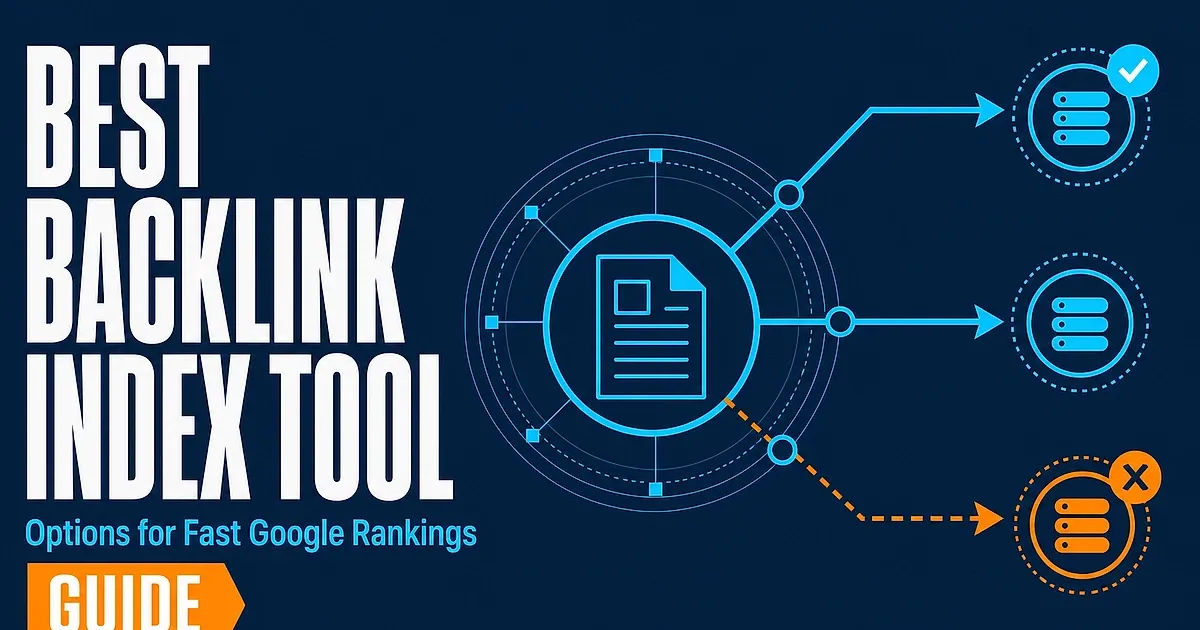
Best Backlink Index Tool Options for Fast Google Rankings in 2026
Field notes from Ethan: what actually holds up in practice, not the textbook version. FTC Disclosure. This guide includes affiliate links. We may …

Best Free Link Indexer: Top Tools for Rapid Google Indexing
From Ethan, plainly — people always ask where to begin, so that’s where we begin. We may earn a commission when you buy through them; your cost …
How to read the recommendations.
Compare a service by the job it can support, not by a promise that it can force Google to index a page.
Google decides whether a page belongs in its index. Treat a service as an optional discovery aid after you have checked indexability, canonicals, sitemap coverage, internal links and the usefulness of the page itself.
Which one fits your job.
10k+ URLs on a budget
Big batches where cost per submission and stability matter most.
Charge me only for indexed URLs
You would rather not pay for submissions that never land.
A quick batch, no dashboard
You want to fire off a list from Telegram and move on.
Which service fits this job?
If the URL is live, indexable, in the sitemap and linked internally, answer three questions to compare a suitable workflow - no signup or email.
Recommendation
Seven tiers scale from a $1 test up to 500k URLs at about $1.7 per 1k. Cheapest per-URL at volume and API-first - built for bulk submission.
Common questions.
Do these services actually get pages into Google?
They speed up discovery - pinging, submitting and prompting a re-crawl - but no tool can force Google to index a thin or duplicate page. Real indexing depends on your domain's authority, history and crawl budget. The honest expectation is faster crawling and a higher indexing rate, not a guarantee.
How do you rank the services?
A five-part score: independent benchmarks and community reports, our own test runs, cost per indexed URL, payment flexibility, and service quality. The weights and the full method are in the methodology section above. We do not run any of these services, and partner links never buy a position.
What is the difference between pay-per-submit and pay-per-result?
Pay-per-submit (2index.ninja) charges for every URL you send, indexed or not - which makes it the cheapest per URL at volume. Pay-per-result (SpeedyIndex) charges only for URLs that actually get indexed and refunds the rest - lower risk, higher unit price. Neither is universally better; it depends on your volume and how much risk you want to carry.
Can I just use the Google Indexing API myself?
Officially the Google Indexing API only supports JobPosting and BroadcastEvent pages - using it for ordinary URLs is an unsupported, grey-area pattern. That is exactly why third-party indexers exist: they combine pinging, IndexNow and re-crawl signals instead of leaning on that one API.
Does IndexNow work for Google?
No. IndexNow is supported by Bing, Yandex, DuckDuckGo and Seznam, but Google does not support it (as of 2026). For Google you are relying on crawling, sitemaps and the discovery signals these services generate - which is why 'Google indexing' and 'IndexNow' are not the same thing.
Is 'crawled' the same as 'indexed'?
No, and services sometimes blur the two. 'Crawled' means Googlebot visited the URL; 'indexed' means the page can actually appear in results (roughly, it shows up for a site: query). A page can be crawled and still not indexed - so judge any indexer by indexed URLs, not by crawl hits.
How do you make money if the finder is free?
Some links to services are partner links - if you sign up through one, we may earn a commission at no extra cost to you. It never changes the scoring or the order, and editorial competitors with no partner link sit right alongside the rest. The full disclosure lives in the footer.
How often is this updated?
We refresh the rankings monthly - new benchmarks, price changes and new entrants - and run a deeper methodology review a couple of times a year or after a major search-engine change.
Fix the cause first.
Choose a tool second.
Check the indexing basics, then use the comparison only if a service fits the job you actually have.